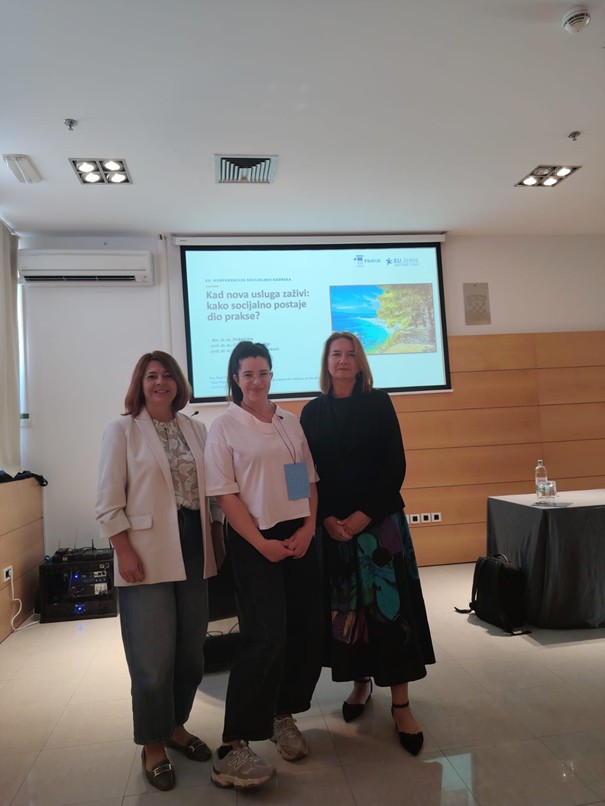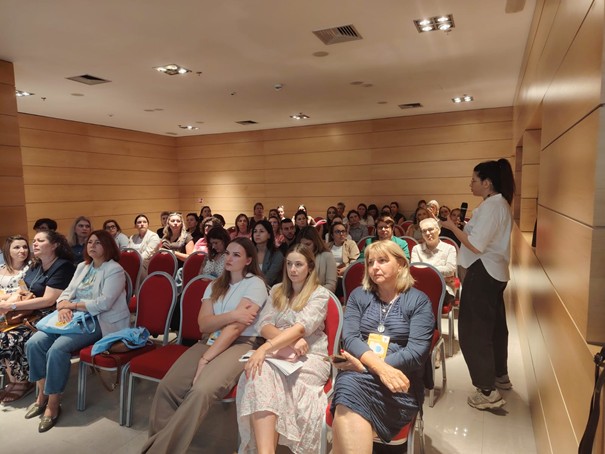
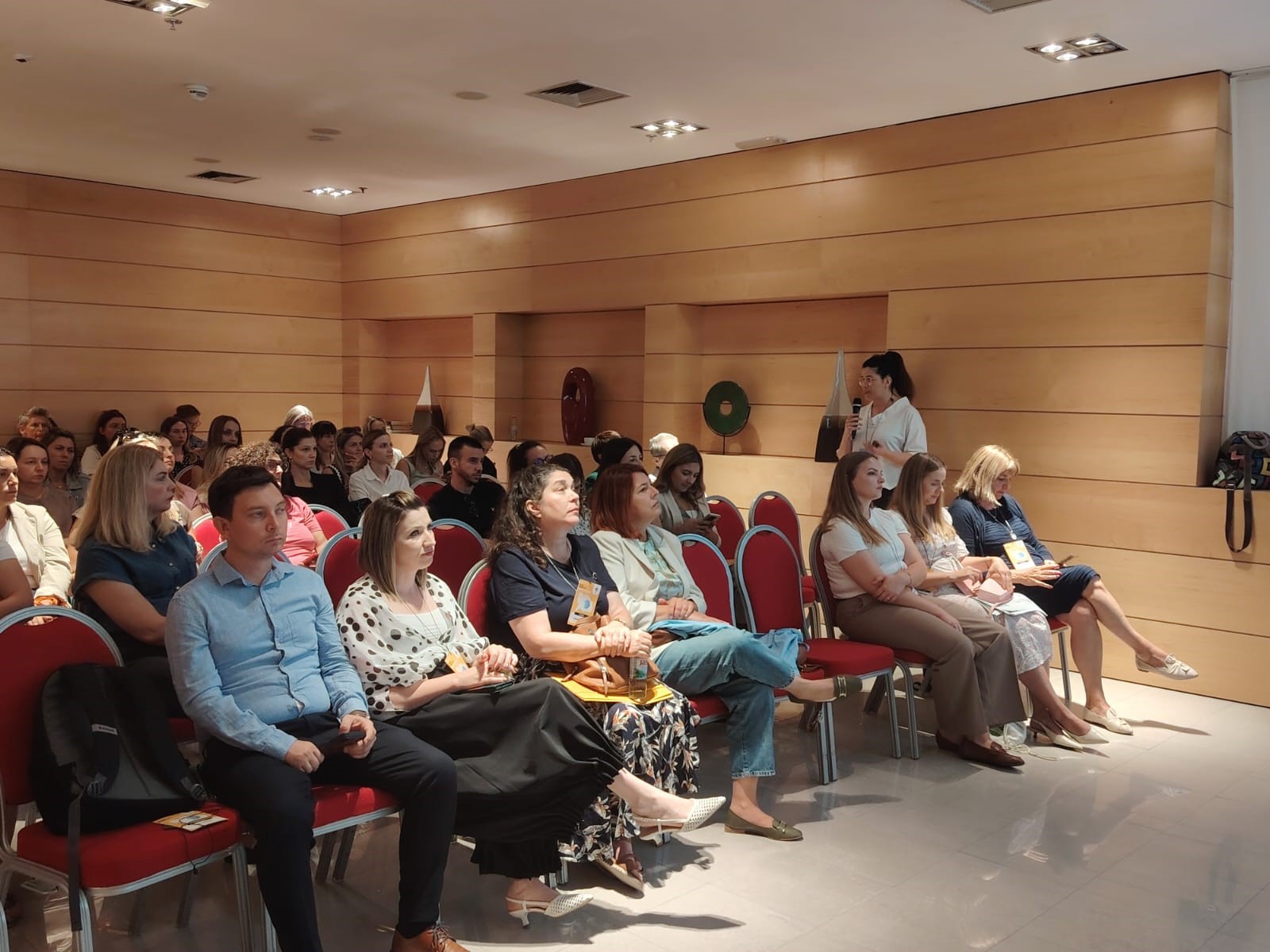
The 15th Conference of Social Workers, entitled “Families and Social Work: A New Reality”, was held in Bol on the island of Brač from 20 to 23 September 2026, organised by the Croatian Association of Social Workers. Assistant Professor Dinka Caha, PhD, attended the conference and presented research findings.
The presentation, entitled “When a New Service Takes Root: How Does Social Mentoring Become Part of Practice?”, shared findings from a study authored by Assistant Professor Dinka Caha, PhD, from the Faculty of Law Osijek, Professor Olja Družić Ljubotina, PhD, and Associate Professor Marijana Kletečki Radović, PhD, from the Faculty of Law, University of Zagreb.
The study was conducted in January and February 2026 and involved 302 social mentors and case managers. It aimed to examine the factors contributing to the successful implementation of social mentoring, a service introduced into the Croatian social welfare system in 2022 to support recipients of the guaranteed minimum benefit, including families at risk of poverty and social exclusion. Network analysis was used to examine the relationships between organisational conditions, the process through which professionals adopt the new service, and their perceptions of the acceptability, appropriateness, and feasibility of social mentoring. The findings highlighted the importance of collaborative and coordinated work among professionals, alongside ongoing reflection on the service’s outcomes. Organisational factors were found to be important primarily in ensuring adequate resources for service delivery.