IZVJEŠĆE O ISTRAŽIVAČKOM BORAVKU
(projekt IPIE – 581-UNIOS-88)
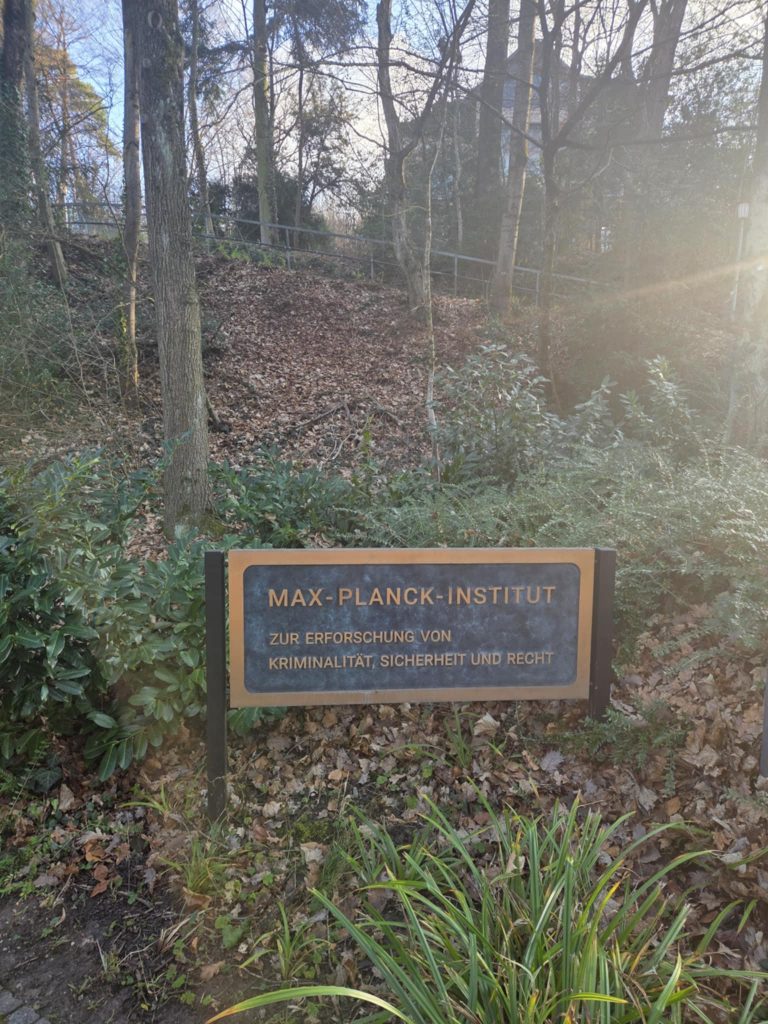
U okviru projekta Implementacijski i provedbeni izazovi europskog prava na odabrane institute u hrvatskom pravnom sustavu (IPIE–581-UNIOS-88) proveden je istraživački boravak u trajanju od dva mjeseca u instituciji Max Planck Institute for the Study of Crime, Security and Law u Freiburgu im Breisgau, Savezna Republika Njemačka. Boravak je realiziran kao dio projektnih aktivnosti usmjerenih na produbljivanje znanstvenog istraživanja europskog prava i njegovih provedbenih izazova u hrvatskom pravnom sustavu, s posebnim naglaskom na kazneno procesno pravo.
Odabir navedene institucije temelji se na njezinoj međunarodno priznatoj ulozi u području kaznenog prava, kaznenog procesnog prava i interdisciplinarnih istraživanja povezanih s tehnologijom, sigurnošću i zaštitom temeljnih prava. Institut pruža iznimno snažnu istraživačku infrastrukturu, osobito u pogledu specijalizirane literature, komparativnih pravnih izvora i suvremenih rasprava o utjecaju novih tehnologija na kazneno pravosuđe, što ga čini posebno pogodnim za istraživanje tema obuhvaćenih ovim projektom.
Sadržaj istraživačkog boravka bio je izravno povezan s izradom doktorske disertacije i strukturiran u skladu s nacrtom poglavlja disertacije. Istraživanje je bilo usmjereno na utjecaj umjetne inteligencije na institut pretpostavke nedužnosti okrivljenika u kaznenom postupku, kao jednog od temeljnih instituta europskog kaznenog procesnog prava.
U okviru boravka analizirani su povijesni razvoj i normativni sadržaj pretpostavke nedužnosti, s posebnim naglaskom na njezin suvremeni doseg u europskom pravu i sudskoj praksi. Istraživanje je obuhvatilo razmatranje primjene tog načela ne samo u fazi sudskog odlučivanja, već i u predraspravnim fazama kaznenog postupka, osobito u kontekstu sve učestalije uporabe digitalnih alata i automatiziranih sustava u radu policije, državnog odvjetništva i sudova.Poseban dio istraživanja odnosio se na ispitivanje učinaka primjene sustava umjetne inteligencije na pojedine sastavnice pretpostavke nedužnosti, uključujući zabranu javnog upućivanja na krivnju, pravila o teretu dokazivanja, načelo in dubio pro reo te procesna jamstva prava na obranu. U tom kontekstu analizirani su algoritamski sustavi za procjenu rizika, prediktivnu analitiku i sustavi potpore odlučivanju,
s ciljem utvrđivanja mogu li i na koji način takvi sustavi dovesti do faktičnog prejudiciranja položaja okrivljenika u kaznenom postupku.
Istraživanje je također obuhvatilo analizu usklađenosti uporabe umjetne inteligencije s relevantnim europskim normativnim okvirom, osobito s Direktivom (EU) 2016/343 o jačanju određenih aspekata pretpostavke nedužnosti te s Uredbom (EU) 2024/1689 o umjetnoj inteligenciji. Posebna pozornost posvećena je pitanjima automatiziranog i poluautomatiziranog odlučivanja, zahtjevima transparentnosti i objašnjivosti algoritamskih sustava te ulozi ljudskog nadzora u zaštiti temeljnih procesnih jamstava.
Predloženi i realizirani istraživački boravak u potpunosti je usklađen s radnim planom projekta IPIE, osobito s Fazom 1 i Fazom 2 provedbe projekta, kao i s prvim radnim paketom provedbe istraživanja. Istraživački boravak bio je predviđen projektnim nacrtima, kao takav je usvojen u okviru projekta te su za njegovu provedbu bila osigurana financijska sredstva u sklopu IPIE projekta.
Predmetna aktivnost ujedno je u potpunosti usklađena sa Strategijom znanstveno-istraživačke djelatnosti Pravnog fakulteta u Osijeku (PRAVOS) za razdoblje 2025.–2030., osobito u dijelu koji se odnosi na poticanje međunarodne mobilnosti, razvoj znanstvenih kompetencija mladih istraživača i jačanje međunarodne vidljivosti znanstvenog rada. Istraživački boravak izravno doprinosi glavnim ciljevima projekta, prvenstveno znanstvenom i stručnom razvoju mladih istraživača i znanstvenika uključenih u projekt, kao i strateškim ciljevima jačanja interdisciplinarnosti znanstvenog rada, osobito kroz povezivanje kaznenog procesnog prava, prava Europske unije i regulacije umjetne inteligencije.
RESEARCH STAY REPORT
(IPIE Project – 581-UNIOS-88)
Within the framework of the project Implementation and Enforcement Challenges of European Law in Selected Institutes of the Croatian Legal System (IPIE – 581-UNIOS-88), a two-month research stay was carried out at the Max Planck Institute for the Study of Crime, Security and Law in Freiburg im Breisgau, Germany. The stay was implemented as part of the project activities aimed at advancing scholarly research on European law and its implementation challenges within the Croatian legal system, with a particular focus on criminal procedure.
The choice of the host institution was based on its internationally recognised expertise in criminal law and criminal procedure, as well as its strong interdisciplinary focus on the interaction between law, technology, security, and fundamental rights. The Institute offers outstanding research infrastructure, particularly in terms of access to specialised legal literature, comparative legal sources, and contemporary debates on the impact of new technologies on criminal justice, making it a particularly suitable environment for research aligned with the objectives of the project.
The research conducted during the stay was directly linked to the preparation of the doctoral dissertation and structured in accordance with the draft dissertation chapters submitted within the project documentation. The research focused on the impact of artificial intelligence on the presumption of innocence in criminal proceedings, understood as a core principle of European criminal procedural law.
The research examined the historical development and normative content of the presumption of innocence, with particular emphasis on its contemporary scope under European law and case law. Attention was paid to the application of this principle not only at the trial stage, but also in pre-trial phases of criminal proceedings, especially in light of the increasing use of digital tools and automated systems by law enforcement authorities, prosecutors, and courts. A significant part of the research addressed the effects of artificial intelligence on specific components of the presumption of innocence, including the prohibition of public references to guilt, rules on the burden of proof, the in dubio pro reoprinciple and defence rights. In this context, algorithmic risk assessment systems, predictive analytics and decision-support tools were analysed in order to assess whether and how such systems may lead to a de facto prejudicing of the position of the accused.
The research also included an analysis of the compatibility of the use of artificial intelligence with the relevant European normative framework, in particular Directive (EU) 2016/343 on the presumption of innocence and Regulation (EU) 2024/1689 on artificial intelligence. Issues of automated and semi-automated decision-making, transparency and explainability requirements, as well as the role of meaningful human oversight in safeguarding procedural guarantees, were examined.
The proposed and implemented research stay is fully aligned with the work plan of the IPIE project, in particular with Phase 1 and Phase 2 of the project implementation, as well as with the first research implementation work package. The research stay was foreseen in the project drafts, formally adopted as part of the project activities, and appropriate financial resources were allocated for its implementation within the project framework.
Furthermore, the activity is fully consistent with the Strategy for Scientific and Research Activity of the Faculty of Law in Osijek (PRAVOS) for the period 2025–2030, particularly with regard to promoting international research mobility, strengthening the research capacities of early-career researchers, and enhancing the international visibility of scientific work. The research stay directly contributes to the core objectives of the project, primarily the scientific and professional development of young researchers and scholars involved in the project, as well as to the strategic objective of strengthening the interdisciplinary character of scientific research, especially through the integration of criminal procedural law, European Union law and artificial intelligence regulation.