



The project encompasses interdisciplinary research on contemporary challenges and development opportunities arising from globalization, accelerated digital transformation, and the growing need for sustainable development. By analysing legal and economic aspects across various thematic areas—including business operations, public finance, tax systems, transport, urban mobility, city digitalization, smart cities, digitalization of public administration, and environmental policies—the project aims to identify weaknesses in existing institutional and regulatory frameworks and offer concrete, feasible reform guidelines aligned with European and global trends.
The objective is to build a flexible, transparent, and efficient regulatory system that fosters sustainable economic development, strengthens institutional resilience, and supports green and digital innovations. Emphasis is placed on creating a system that encourages green and digital innovation, enhances institutional resilience, and ensures long-term sustainability.
A particular focus is placed on the role of technology, ESG standards, fiscal policy instruments, and sustainable transport solutions in the context of climate challenges and global goals. The project additionally explores the relationship between economic efficiency and environmental protection through an evaluation of market-based versus regulatory measures. By integrating law, economics, environmental sciences, and technology, the project contributes to shaping inclusive, innovative, sustainable, and applicable solutions in legal, economic, and public policy practice, aligned with European and global objectives.
Project leader:

izv.prof.dr.sc. Emina Jerković

prof.dr.sc. Renata Perić
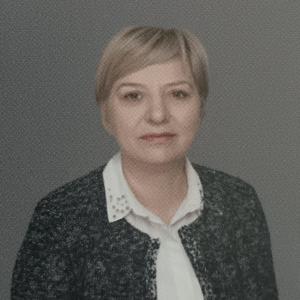
prof.dr.sc. Aleksandra Vasilj

prof.dr.sc. Dubravka Akšamović
Leader of WP 2 Training (conferences and education):

izv.prof.dr.sc. Biljana Činčurak Erceg
Leader of WP 1 Conducting research:

izv.prof.dr.sc. Katarina Marošević

izv.prof.dr.sc. Martina Mikrut Nađsombat
Leader of WP 3 Open access and dissemination:

izv.prof.dr.sc. Lidija Šimunović Dikonić
Lucija Živković

Katarina Katavić
izv.prof.dr.sc. Emina Jerković
Funded by the European Union – Next Generation EU. However, the views and opinions expressed are solely those of the author(s) and do not necessarily reflect those of the European Union or the European Commission. Neither the European Union nor the European Commission can be held responsible for them.